
Beyond IoT: A New Era of Industrial Intelligence
For years, “IoT” was the shorthand for factory modernization: sensors on machines, data flowing to dashboards, more visibility into what was happening on the shop floor. That story is no longer new. It is the baseline.
The conversation in advanced manufacturing has moved on. Today, it centers on IIoT (Industrial Internet of Things) and AIoT (Artificial Intelligence of Things). Connected data no longer just informs people; it feeds directly into analytics, AI models, and increasingly autonomous decision-making.
The World Economic Forum’s Intelligent Industrial Operations Outlook 2026 captures this shift well. The report describes how industrial operations are moving away from traditional automation and toward intelligent, connected, and increasingly autonomous systems, powered by frontier technologies such as AI, physical AI, and digital twins. Rather than isolated pilots, leading manufacturers are building operating models where humans and intelligent systems work together in real time, evolving from assisted intelligence toward more adaptive, self-orchestrating operations. This is the direction FOZ One is building toward.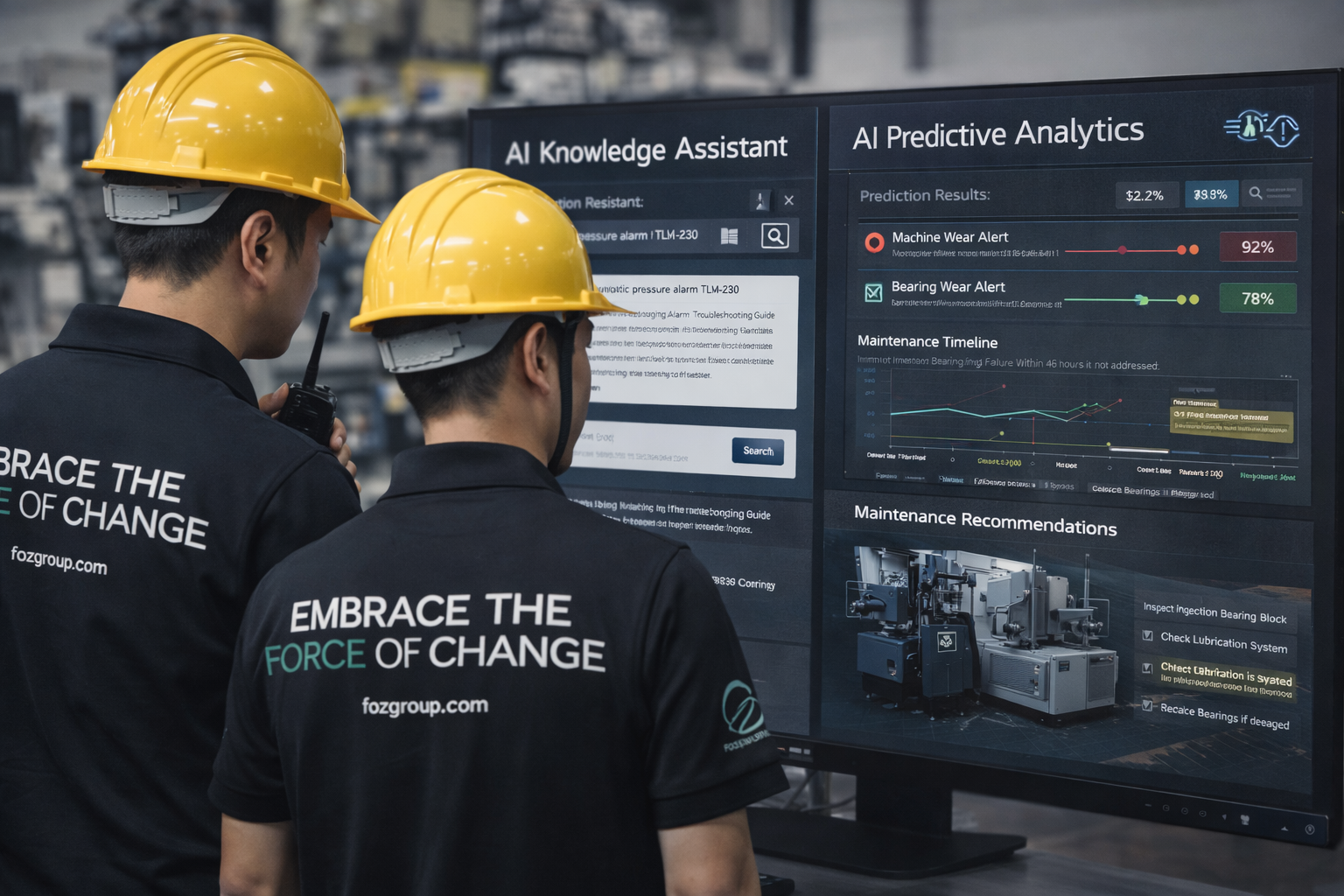
From Connectivity to Intelligence: What’s Changing
A connected factory tells you what is happening. An intelligent one tells you what is about to happen, and increasingly, acts on it.
⚙️ Equipment Reliability: From Monitoring to Prediction Condition monitoring was the first step, catching abnormal patterns after they appear. The next step is predictive maintenance, where AIoT-enabled systems learn equipment behavior over time, flag early signs of degradation, and help teams intervene before a fault becomes a disruption.
📊 Operational Visibility: From Dashboards to Digital Twins Real-time dashboards gave teams a clearer view of operations as they happened. Digital twins go further, creating a live, data-driven model of equipment, lines, or the wider facility that can simulate scenarios, forecast bottlenecks, and support faster, more confident decisions.
⚡ Energy & Resource Efficiency: From Tracking to Optimization Understanding consumption patterns is valuable, but AI-driven optimization is what turns that data into measurable savings, dynamically adjusting usage based on demand, production schedules, and facility conditions.
Intelligence Beyond the Production Floor
This shift isn’t confined to the factory floor. Smart building systems extend the same principle, connecting energy, facilities, and environmental monitoring into a single digital ecosystem, so intelligence flows across the entire operation, not just individual production lines.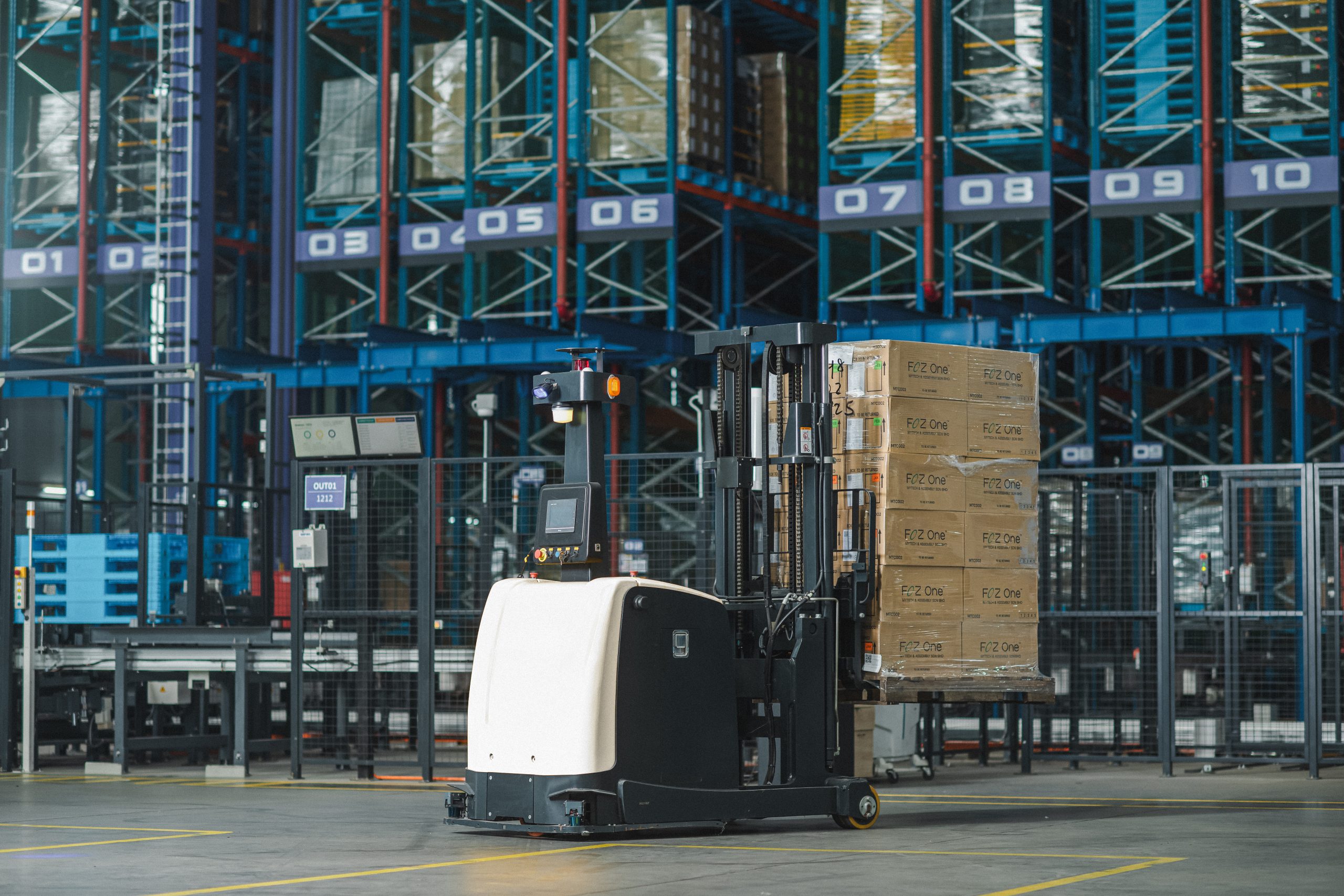
FOZ One’s Journey Forward
At FOZ One, we are strengthening our connected manufacturing environment, from equipment-level sensing and operational systems to our smart-enabled headquarters, as part of a broader shift toward intelligent, increasingly autonomous manufacturing. Connectivity was the foundation. It made data available. The next chapter is about what we do with that data: turning IIoT and AIoT into predictive insight, predictive insight into autonomous decision-making, and decision-making into measurable operational performance.
Because the future of manufacturing isn’t just about being connected. It’s about being intelligent, and increasingly, autonomous.
Source: World Economic Forum, Intelligent Industrial Operations Outlook 2026
#FOZOne #IIoT #AIoT #IntelligentOperations #DigitalTwin #SmartManufacturing #DigitalTransformation